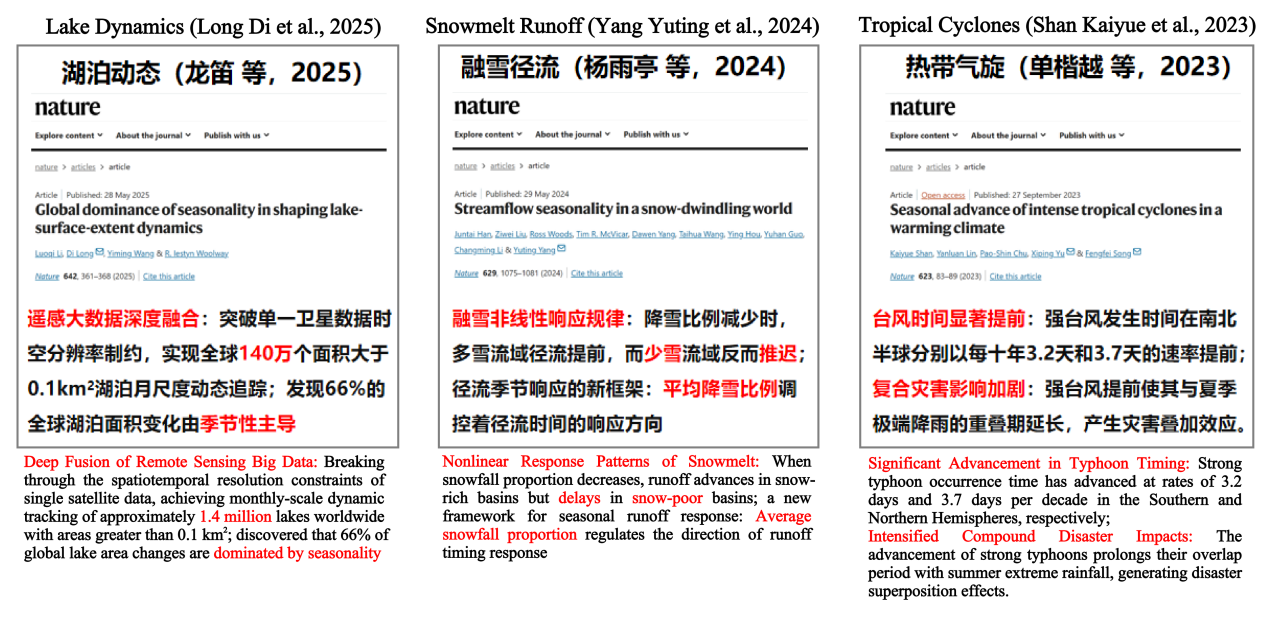
Constructed a global lake remote sensing big data spatiotemporal fusion framework, filling numerous gaps in existing lake area datasets, achieving monthly-scale dynamic monitoring of approximately 1.4 million lakes worldwide with areas greater than 0.1 km², and discovering that the area changes of more than half of the world’s lakes are dominated by seasonal fluctuations.
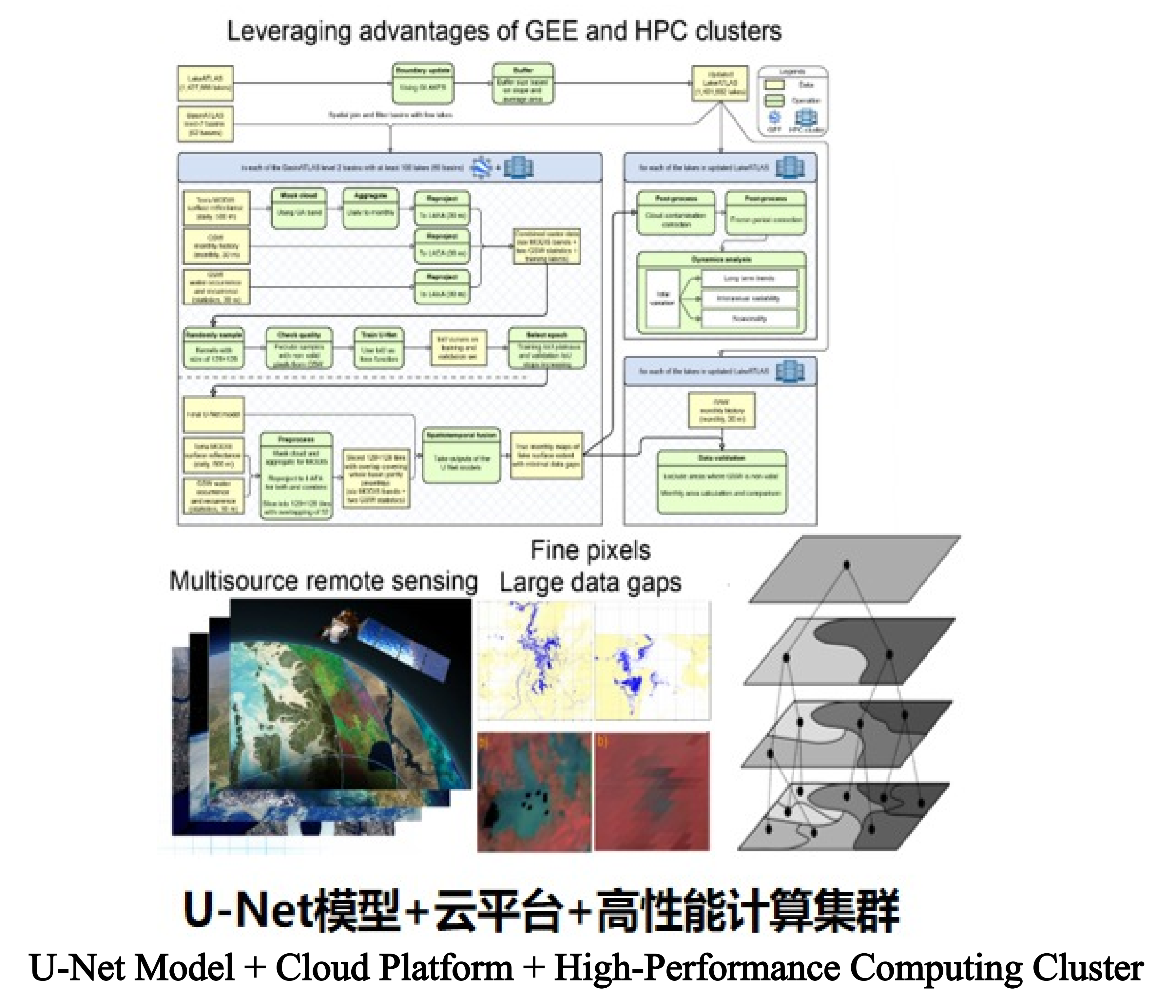
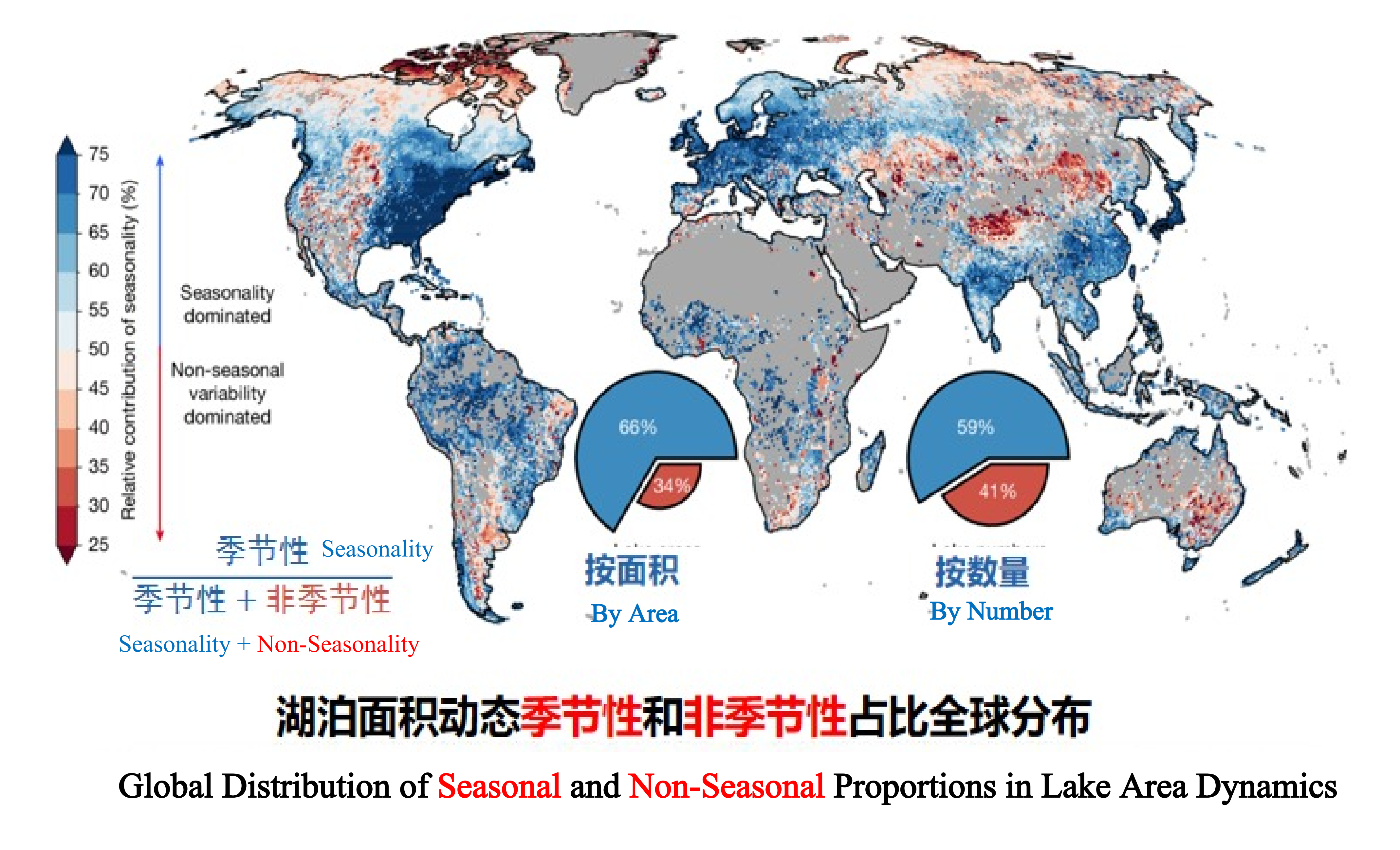
Li, L., Long*, D., Wang, Y. et al. Global dominance of seasonality in shaping lake-surface-extent dynamics. Nature, 2025
Research found that although a decrease in snowfall proportion generally leads to earlier runoff, this relationship is not linear. Under the threshold of multi-year average snowfall proportion (𝒇ₛ) = 0.4, a decrease in 𝒇ₛ in snow-rich basins advances runoff, while a decrease in 𝒇ₛ in snow-poor basins delays runoff
In-depth analysis of remote sensing and reanalysis big data shows: The occurrence season of global super typhoons has significantly advanced, with rates of 3.2 days and 3.7 days per decade in the Southern and Northern Hemispheres, respectively, and the risk of “super typhoon–summer storm rainfall” compound disasters has significantly increased
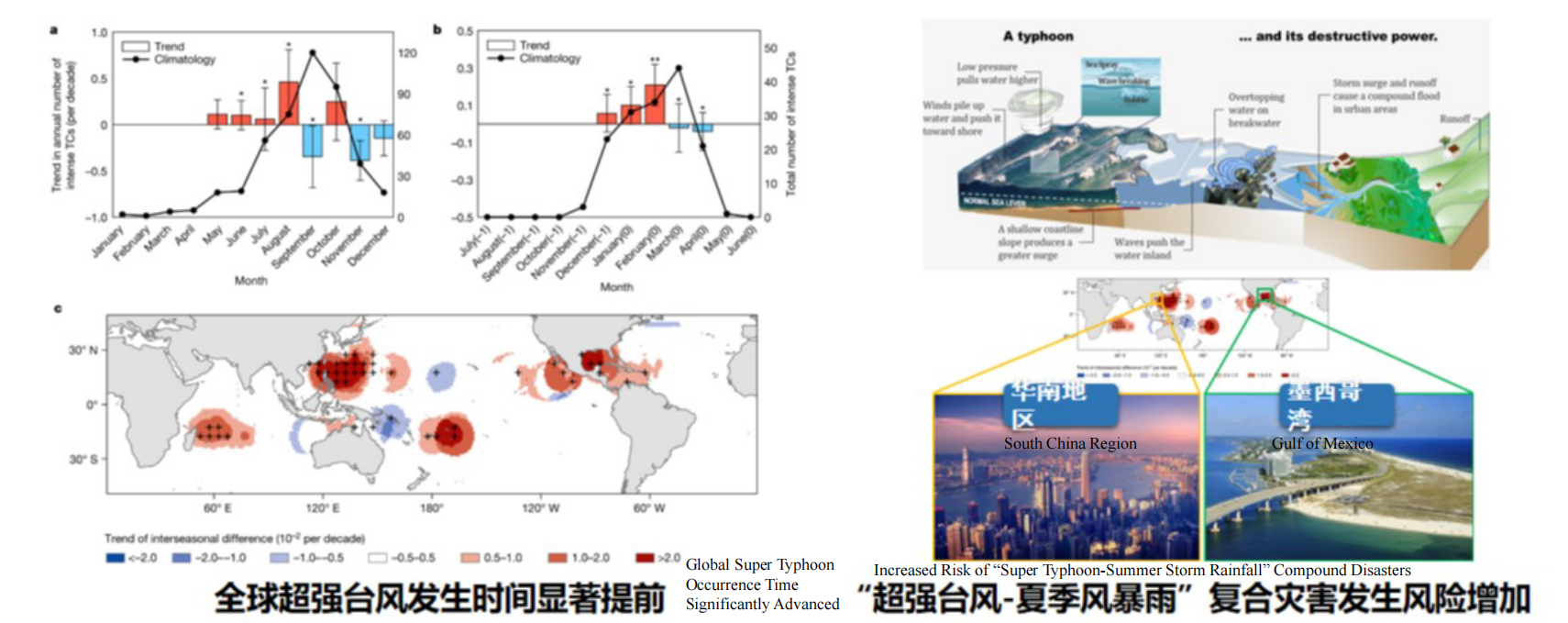
Shan, K., Lin, Y, chu, p....u*, X. Seasonal advance of intense tropical cyclones in a warming climate. Nature, 2023




 Achievement Links
 Administrator Mailbox