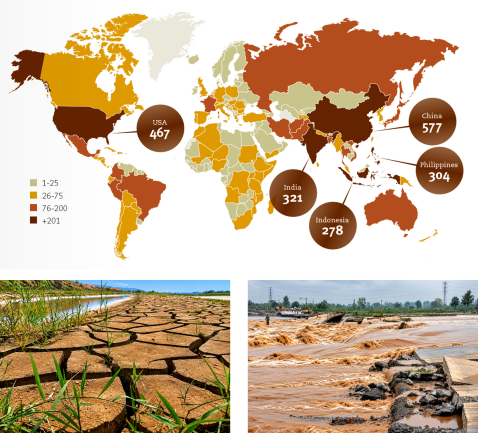
Research Background: Flood and drought effects produced by the water cycle are pronounced; identifying the atmosphere–land water cycle network, predicting water cycle processes, and achieving localized modulation are critically important
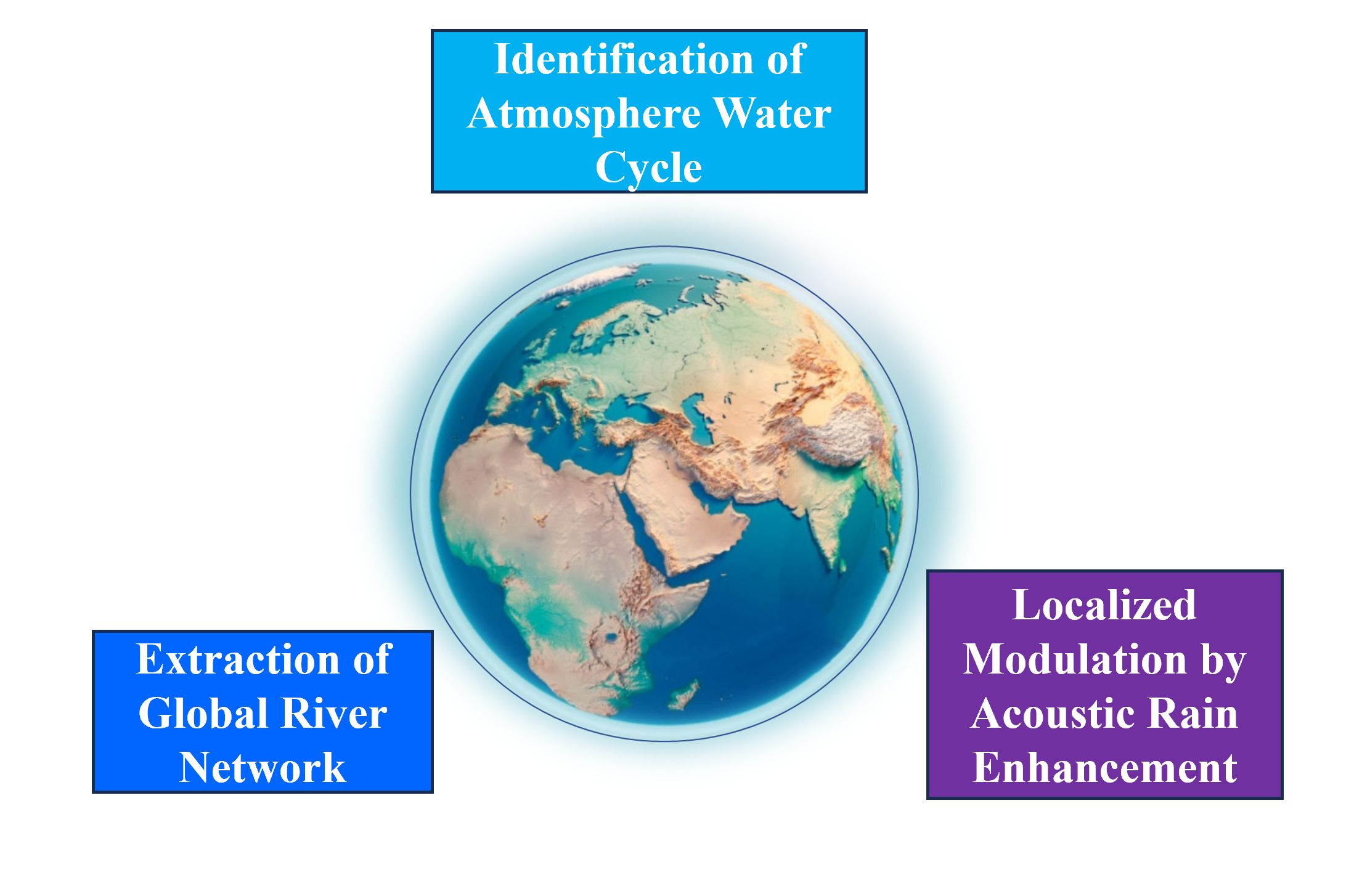
Proposed methods for identifying atmospheric water-cycle pathway and predicting precipitation
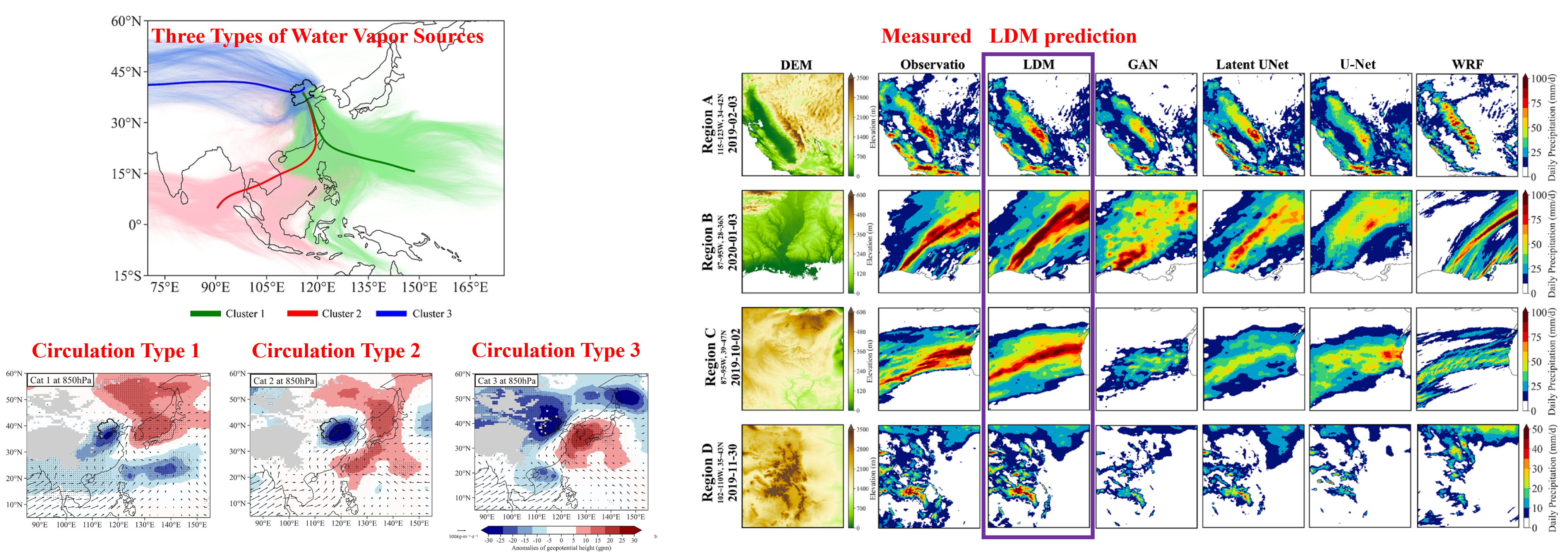
Identified the moisture sources and the circulation conditions responsible for the hazards using water vapor transport trajectories
Established a latent diffusion model (LDM) to forecast high-resolution precipitation fields
Established a physically based AI basin model
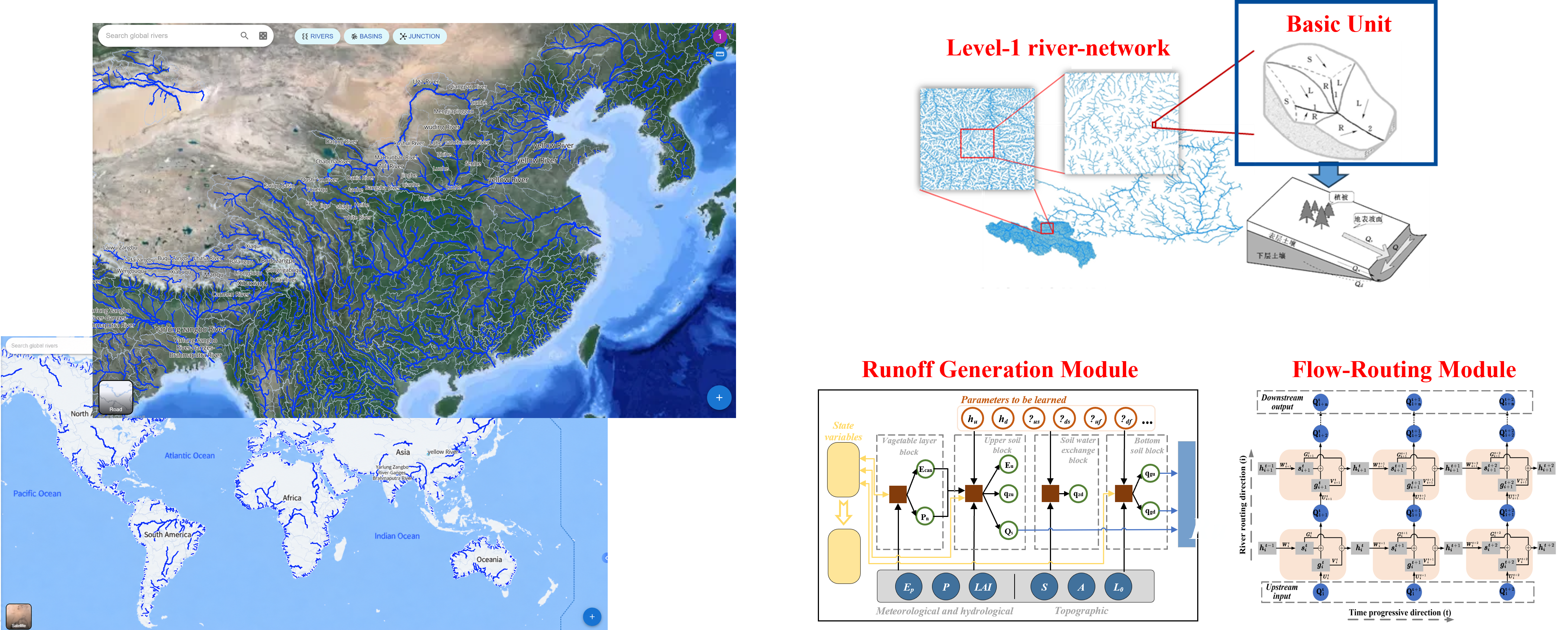
Proposed an algorithm for large-scale river-network extraction and released the Hydro12 global dataset
Created a physicalized neural network model for river basin modelling
Developed a series of acoustic rain enhancement equipments
Demonstrated the effects of sound field on cloud droplet collision–coalescence and droplet size distribution evolution
Self-developed low-frequency sound sources with high sound pressure level (SPL) and high acoustic quality to meet the sound-field requirements of rainfall enhancement
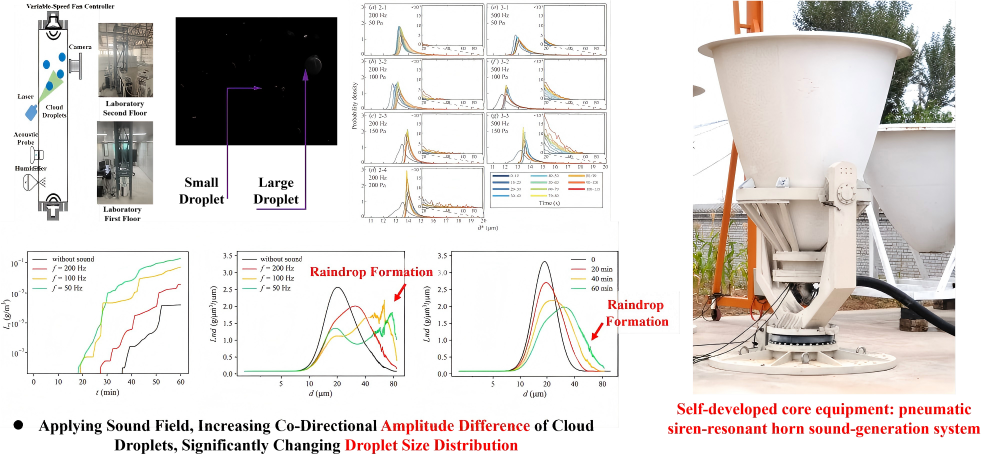
In situ experimental validation and coupled atmosphere–land water resource utilization
Conducted large-scale in situ acoustic rain enhancement trials across different climate zones, comprising more than 1,000 experimental cases
Statistical tests showed that the influence zone of a single equipment reaches the order of 100 km², with a rainfall-enhancement ratio generally greater than 20%
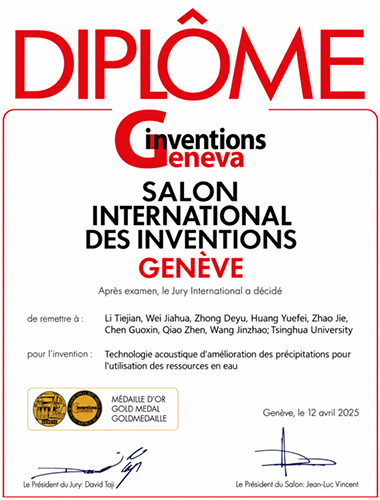
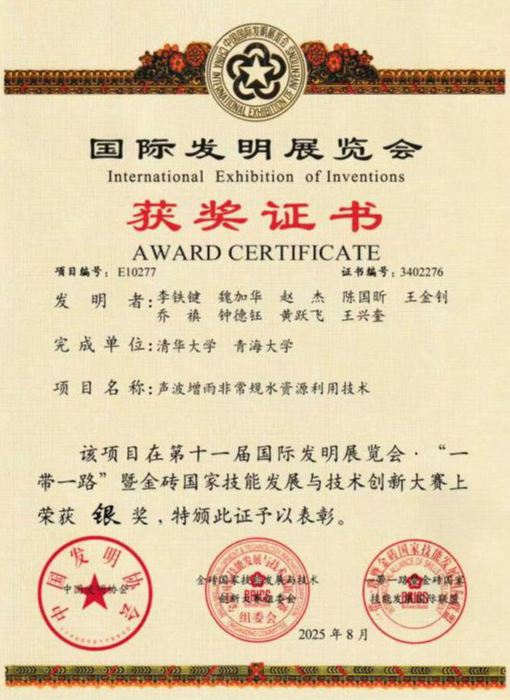
The work received a Gold Medal at the International Exhibition of Inventions of Geneva and the Silver Medal at the 11th International Exhibition of Inventions
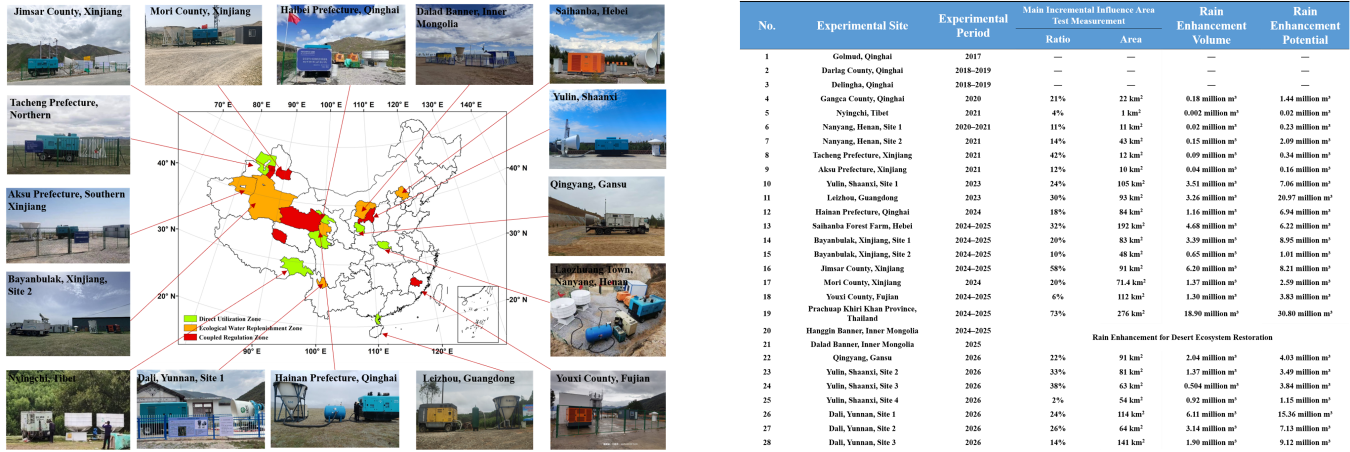
In situ verification and coupled atmosphere–land water resource utilization: the Jimusaer demonstration
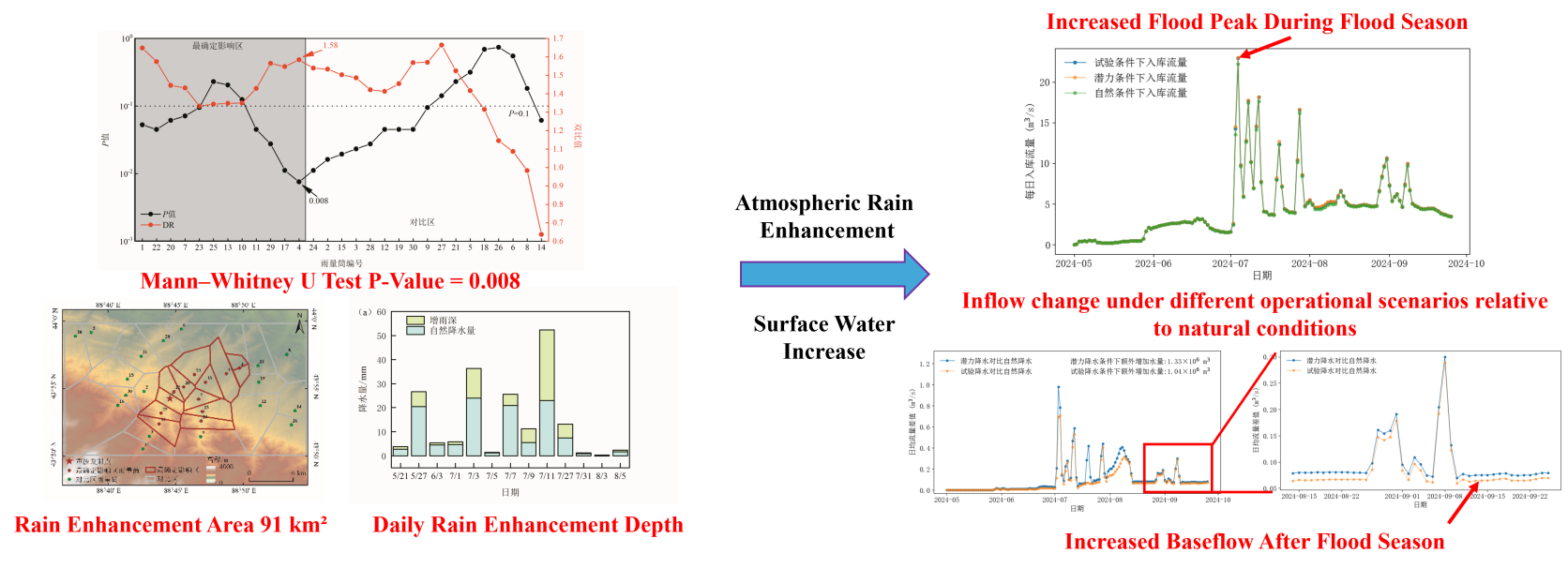
Implemented coupled atmosphere–land water resource utilization in Jimusaer County, Xinjiang, with an effective rainfall-enhancement influence area of 91 km² and a rainfall-enhancement ratio of 58%
Across 13 effective operating days, the experiments produced a volumetric rainfall enhancement of 6.22 million m³
According to calculations with the AI basin model, the experiment increased the inflow to Xidalongkou Reservoir by 1.04 million m³, at a cost of approximately CNY 1/m³



 Achievement Links
 Administrator Mailbox